
What to do with your kids' drawings
By The Everform studio · Updated September 4, 2026 · 5 minute read
We sculpt children's drawings into ceramic every week, so we spend a lot of time looking at what families actually keep.
Every family ends up with the same pile: hundreds of drawings, a handful you genuinely love, and no system. This is a guide to the system, to the ten realistic ways of keeping the ones that matter, with what each actually costs, and to the handful of ways a single drawing can become something you keep on a shelf for the rest of your life.
Keep fewer, on purpose
The pile is not the problem. The absence of a decision rule is. Photograph everything as it comes in, on the day, so nothing is lost. Then keep the physical original of only the ones that stop you: the first face with the right number of eyes, the family with the dog drawn bigger than the house, the one they were proud of. Everything else lives in the photo archive and can be recycled without guilt.
A flat archive box per child, one drawing per sheet, name and date pencilled on the back, holds years of the good ones and takes up less room than a single winter coat. Sort it once a year, ideally with the child, who will be brutal about the ones that no longer matter to them.
First: photograph every drawing properly
Every option below starts with a photograph, so it is worth thirty seconds to do it right. Lay the drawing flat by a window in daylight, stand directly above it, and make sure your own shadow is off the paper. Fill the frame with the page. If the paper curls, weight two corners with coins outside the drawing. That is the whole technique.
Do it on the day the drawing comes home and the archive builds itself. A photo of a drawing is enough to make a book, a mug, a piece of jewellery or a sculpture from it years later, even after the paper itself is long gone. The photograph is the insurance; the keep-or-recycle decision stops being scary the moment it exists.
The ten ways, compared
Everything a family realistically does with kids' art, priced honestly, including the options we do not sell. Costs are typical US prices as of late 2026 and worth checking before you buy.
| Method | Typical cost | Effort | What you end up with |
|---|---|---|---|
| Photo archive on your phone | $0 | 30 seconds per drawing | Everything, forever, searchable. The foundation for all the rest. |
| Flat archive box | about $20 per child | One sort per year | The physical originals that matter, safe and out of sight. |
| Swap frame with an opening front | about $30 to $45 each | Ten seconds per swap | A wall that always shows the current favourite. |
| Wire and clips gallery | under $20 | None | Six or eight drawings up at once, changed without tape. |
| Bound photo book (Chatbooks, Mixbook) | about $10 to $35 per year | An evening per year | A year of drawings in one book, with the child's own captions. |
| Archive service (Artkive) | about $40 to $200 plus | They do the work | The whole pile digitised into a book or framed piece. Costs scale with volume. |
| Digital art frame (Skylight and similar) | about $170 | Upload as you go | A rotating screen of the archive. A screen, though, not an object. |
| Onto an everyday object: mug, tote, tee | about $15 to $30 | Minutes online | Used daily, worn out in a year, which is fine. |
| Plush toy sewn from the drawing | about $100 to $150 | Order and wait several weeks | The drawing as something soft a child can hold now. |
| Ceramic sculpture of the drawing (ours) | from $99 | One photo, preview in about a minute | The drawing as a permanent object on a shelf, lines exactly as drawn. |
Ways to display the favourites
Rotation beats accumulation. The goal is a wall that always looks intentional, not a fridge that has stopped being a fridge.
- One swap-frame per childabout $30 to $45
A frame with a front that opens, changed whenever they bring home something they are proud of. The old one goes into the archive box. Some store twenty drawings behind the current one.
- A picture rail or wire with clipsunder $20
Six or eight drawings at a time in the kitchen or hallway, so a new one goes up without anything being un-taped. The cheapest option that still looks deliberate.
- A yearly bound photo bookabout $10 to $35 a year
Made from the photo archive in an evening with Chatbooks or Mixbook. Ask the child to name each drawing; the captions are usually better than the art.
- A drawing on something used every dayabout $15 to $30
A mug, a tote, a t-shirt. Cheap, fast, and worn out in a year, which is fine. Best for the drawing of the month, not the drawing of the decade.
- A digital art frameabout $170
Skylight and similar frames rotate the whole archive on a screen. Good for volume; it is the only option here where you end up with a gadget rather than a thing they made.
Turning one drawing into a real object
For the one drawing that everyone in the family can describe from memory, there is a category of services that turn it into a three-dimensional thing. This is where the pile stops being a storage problem and one drawing becomes an heirloom.
- A plush toy sewn from the drawingabout $100 to $150
The best-known option, and the right one for a child who wants to hug the monster they drew, today. Expect to pay before seeing anything and to wait several weeks while it is sewn.
- Jewellery traced from the drawingabout $30 to $80
A pendant or keychain cut from the outline, usually in silver or steel. Lovely and small; works best for simple single-line figures, and the drawing becomes a silhouette rather than itself.
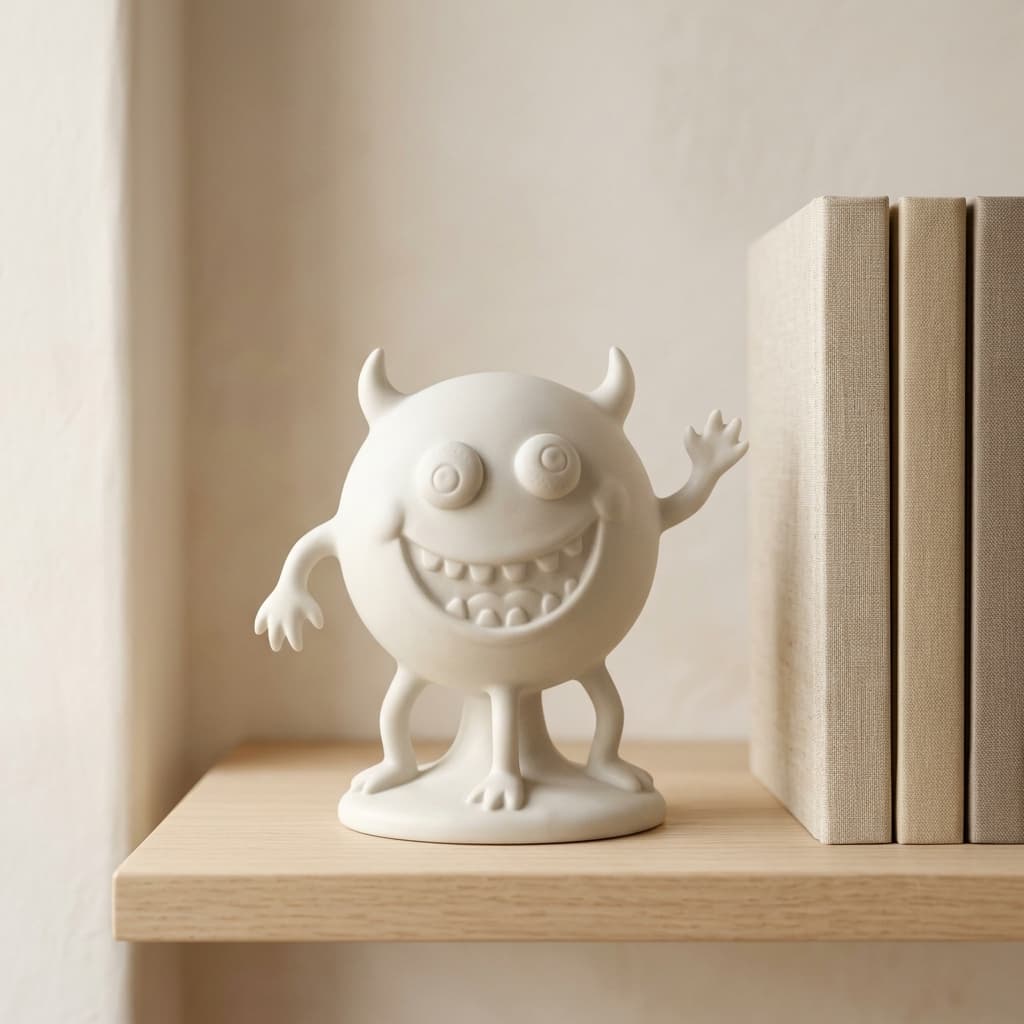
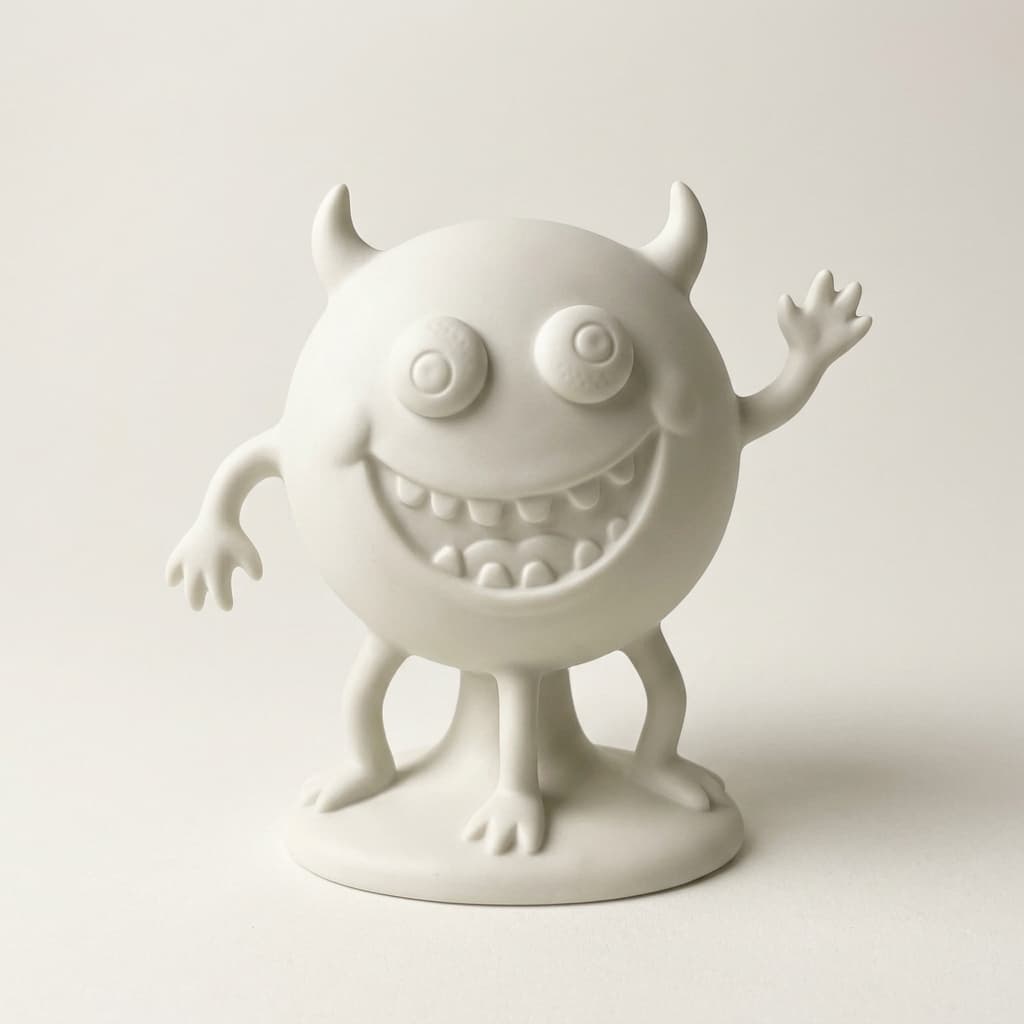
Ours. Send a photo of the drawing and see a free preview of it as a sculpture in about a minute, before paying anything. The piece is matte engineered ceramic, hand-finished in our Massachusetts studio in 5 to 10 business days, with the lines and proportions exactly as the child drew them.
Which drawings work best as an object
A single character or creature with clear outlines, on plain paper, drawn in one sitting. Faces, animals, monsters, robots and self-portraits all work. The things that do not translate are scenes with many small parts, drawings on lined paper where the lines compete with the art, and anything so faint the outline cannot be read. For those, the photo book is the better home.
Do not tidy it
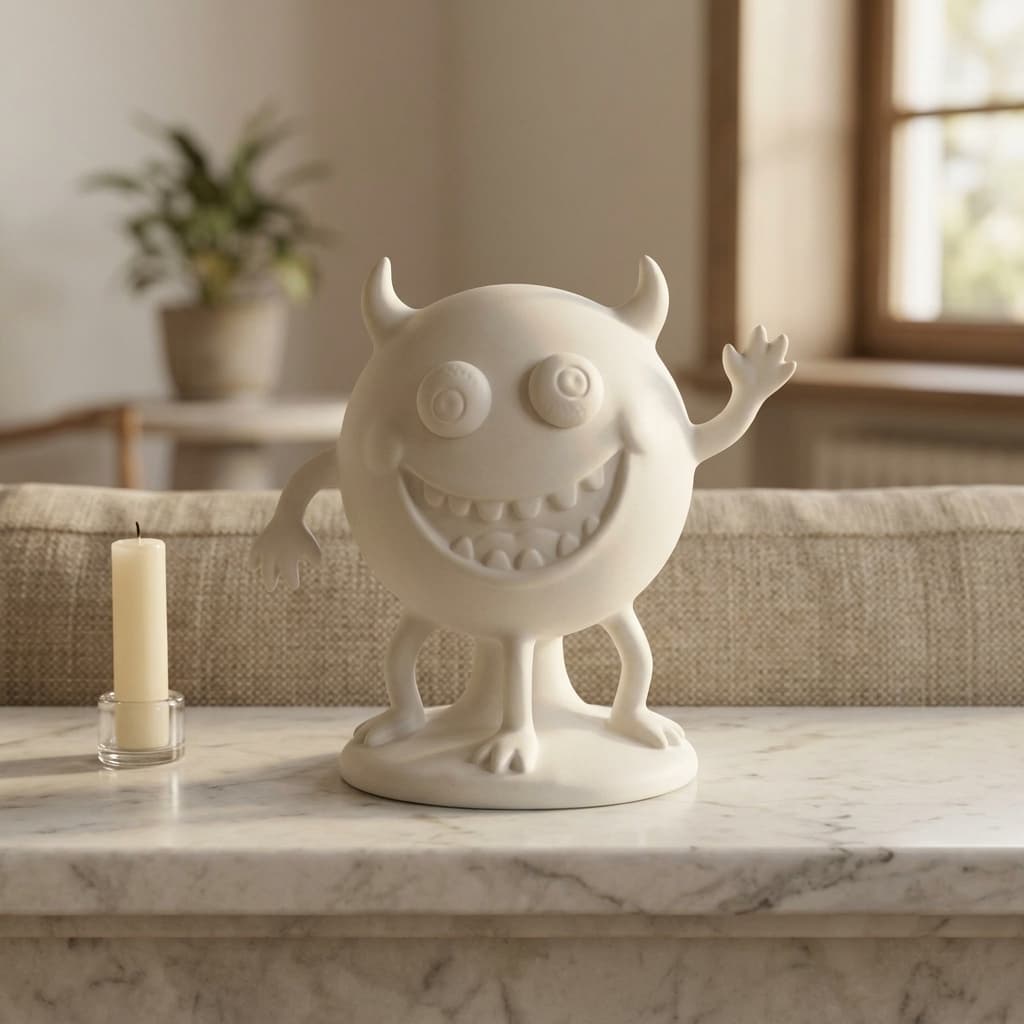
The temptation with any of these is to improve the drawing on the way to the object: straighten the arm, even out the eyes. Resist it. The uneven arm is the point. In five years nobody will remember what the child meant to draw, and everybody will remember what they drew. The best versions of every option above, from the mug to the sculpture, are the ones that changed nothing.
What to do with the rest
Grandparents. A drawing in an envelope is the cheapest, most reliably delighted-with post a child can send, and it moves a drawing out of your house into one where it will be on a fridge for a year. Pair it with the photo archive so nothing is actually lost, and recycle the remainder in a bag the child does not see, which is a small kindness to everyone.
Made by us
- Kid's Drawing Keepsake
Turn a photo of your child's drawing into a sculpted matte engineered-ceramic figurine. Free instant preview from one photo, before you order.
Questions & Answers
- Is it okay to throw away my kids' drawings?
- Yes, once each one is photographed. Keep the originals that stop you, send some to grandparents, and recycle the rest out of the child's sight. The photograph preserves the option to make something from any drawing later.
- What does it cost to turn a drawing into a real object?
- Roughly $15 to $30 for a mug or tote, $30 to $80 for jewellery, about $100 to $150 for a plush toy, and from $99 for our ceramic sculpture, which shows you a free preview before you pay anything.
- Which drawings work best as a sculpture?
- A single character or creature, drawn with clear outlines, on plain paper. Photograph it flat in good light. Scenes with many small parts are better as prints or in a book.
- Does the sculpture keep the child's proportions?
- Yes. The point is the drawing as they drew it, uneven limbs and all. We do not tidy it into something realistic.
- How long does it take?
- Each piece is made to order in 5 to 10 business days, plus shipping at the speed you choose. The free preview is ready in about a minute.
- How many drawings should I keep?
- Fewer than you think. One flat archive box per child, holding only the ones that stop you, is plenty for years. Photograph everything so the rest can go without guilt.
- Plush toy or ceramic sculpture?
- A plush is soft, huggable and made for a child to keep now. A sculpture is for the adult the child becomes, and for the parent's shelf. Many families do the plush at five and the sculpture at fifteen, from the same drawing.